POLL OF THE DAY: Is Britain getting value for money from its border deal with France? VOTE NOW
POLL OF THE DAY: Is Britain Getting Value for Money From Its Border Deal With France?

The question of whether Britain is getting value for money from its border deal with France has once again become one of the most fiercely debated political issues in the United Kingdom. With taxpayers committing hundreds of millions of pounds to help French authorities combat illegal Channel crossings, many Britons are asking a simple question: Are the results worth the cost?
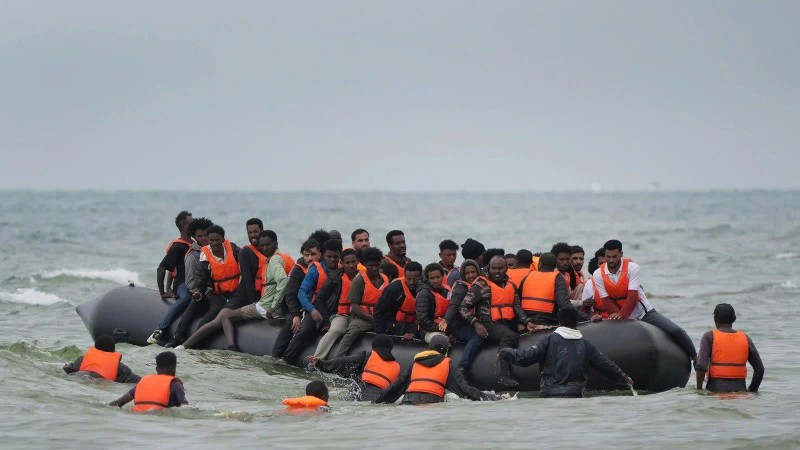
Recent rescue operations in the English Channel, where more than 170 migrants were saved after a boat caught fire, have highlighted both the humanitarian dangers of illegal crossings and the ongoing challenges facing British and French authorities. While government officials point to falling crossing numbers as evidence that cooperation is beginning to work, critics argue that Britain continues to spend vast sums with only limited success.
A Multi-Million Pound Partnership
The latest UK-France border agreement commits Britain to spending approximately £662 million over three years to strengthen French border enforcement.
The funding is intended to finance:
-
Additional French police officers
-
Improved surveillance systems
-
Drones and thermal cameras
-
Intelligence sharing
-
Joint operations against people-smuggling gangs
-
Expanded powers for French authorities to intercept migrant boats before they leave French beaches
According to the UK Government, investing in prevention is considerably cheaper than processing asylum claims, housing migrants in hotels, and dealing with the long-term costs of illegal migration once people reach British soil.
Have Crossings Fallen?
Supporters of the agreement argue there are encouraging signs.
French officials have reported that illegal Channel crossings during 2026 are substantially lower than during the same period in 2025. Some reports suggest crossings have fallen by more than 40 percent compared with last year.
Officials credit:
-
Better intelligence
-
Increased patrols
-
Faster deployment of officers
-
New surveillance technology
-
Stronger cooperation between both governments
If these figures continue, ministers will argue the investment is beginning to pay dividends.
However, statistics alone rarely settle political arguments.
Critics note that thousands of migrants are still successfully reaching Britain despite record spending, while smugglers continue adapting their tactics by launching boats from more remote beaches and using increasingly overcrowded vessels.
Taxpayers Want Results
For many voters, the debate is less about diplomacy and more about accountability.
Since 2018, Britain has committed increasingly large sums to French border security through several agreements.
Many taxpayers ask:
“If Britain keeps paying more, why do migrant boats continue arriving?”
Opposition politicians argue that simply increasing funding without demanding measurable improvements risks turning the arrangement into an open-ended financial commitment.
Some commentators have even described Britain as effectively paying France to police its own coastline—a characterization French officials reject, insisting the two countries share responsibility for protecting one of the world’s busiest waterways.
The political challenge is that every widely publicized migrant arrival fuels criticism, regardless of whether overall numbers are declining.
The Humanitarian Reality
Beyond politics lies a far more serious issue.
Crossing the English Channel in overcrowded inflatable boats remains extremely dangerous.
Recent rescue missions demonstrated just how quickly conditions can become life-threatening when engines fail or boats catch fire.
French rescue crews, British Border Force, lifeboat volunteers and coastguard teams regularly work together to prevent tragedies.
Many migrants refuse rescue until absolutely necessary because they fear being returned to France if intercepted too early.
This places emergency responders in exceptionally difficult situations where every decision must balance humanitarian obligations with immigration enforcement.
Smuggling Gangs Continue to Adapt
One reason critics remain skeptical is that criminal networks appear highly adaptable.
Whenever authorities increase patrols in one area, smugglers frequently respond by:
-
Launching boats further along the French coastline.
-
Using larger inflatable vessels.
-
Departing during poor weather or darkness.
-
Charging migrants even higher prices.
Experts warn that policing alone cannot eliminate a market that generates millions of pounds annually for organized crime groups.
Without dismantling these networks and addressing the reasons migrants continue attempting the crossing, enforcement measures may only shift the problem rather than solve it.
Political Pressure Mounts

Migration remains one of the defining issues in British politics.
The Government argues that international cooperation is the only realistic solution because Britain cannot stop departures from French beaches without French assistance.
Meanwhile, critics—including politicians from several parties—contend that stronger domestic measures, quicker asylum decisions, and more robust returns policies should accompany any financial support for France.
Recent proposals to deploy additional military resources in the Channel have generated significant legal and diplomatic debate, with experts warning that unilateral action could breach international law and strain relations with France.
Measuring “Value for Money”
Ultimately, determining whether the agreement represents value depends on how success is measured.
If the goal is:
Reducing crossings, then falling numbers may suggest progress.
If the goal is:
Stopping crossings entirely, then the agreement has clearly not achieved that objective.
If the goal is:
Preventing deaths, improved rescue coordination between British and French authorities undoubtedly saves lives, although dangerous journeys continue.
If the goal is:
Ending people-smuggling, criminal gangs remain active despite increased enforcement.
These differing benchmarks explain why opinions remain sharply divided.
The Public Has the Final Say
Today’s poll reflects a broader national debate rather than a simple political disagreement.
Supporters argue that no border strategy can deliver immediate perfection and that cooperation with France represents the most practical solution available.
Opponents believe Britain has already spent enormous sums while illegal crossings continue, making it difficult to conclude taxpayers are receiving full value for their money.
As the Government prepares future immigration policies and negotiates continued cooperation with France, public opinion will likely play an increasingly important role.
Whether voters see the agreement as a worthwhile investment or an expensive disappointment may ultimately influence the direction of Britain’s border policy for years to come.
Poll of the Day
Is Britain getting value for money from its border deal with France?
-
Yes – Falling Channel crossings show cooperation is beginning to deliver results.
-
No – Britain is spending hundreds of millions while illegal crossings continue.
-
Unsure – More time is needed before judging whether the agreement has been successful.
