Muslim charity with close ties to Iran’s regime given rights to bring ‘skilled workers’ and religious ministers to Britain

A new immigration decision has ignited fierce political debate across the United Kingdom after a Muslim charity reportedly linked by critics to Iran’s ruling establishment was granted permission to sponsor overseas workers and religious ministers under Britain’s immigration system.
The development has immediately become one of the country’s most controversial political stories, with opposition politicians, security commentators, and campaign groups questioning whether the government has done enough to examine organizations connected to foreign governments before granting them access to the UK’s sponsorship scheme.
While supporters insist the charity is operating legally and has not been accused of breaking British law, critics argue that the issue goes far beyond immigration. They say it raises difficult questions about national security, foreign influence, and Britain’s relationship with organizations alleged to have ideological or institutional links to the Iranian regime.
The controversy began after reports emerged that the organization had been approved as a licensed sponsor, allowing it to recruit certain skilled workers and religious ministers from abroad under existing immigration rules.
Under Britain’s sponsorship system, licensed organizations can bring qualified employees into the country if they meet Home Office requirements. Thousands of businesses, universities, charities, hospitals, and religious institutions currently hold similar licenses.
However, this particular approval quickly attracted attention because of longstanding allegations regarding the charity’s connections with institutions associated with the Iranian government.
Those allegations have become the center of an increasingly heated political argument.
Several MPs have questioned why an organization facing repeated public scrutiny over its alleged ties was considered suitable for sponsorship privileges.
Critics argue that Britain has spent years warning about hostile foreign influence from authoritarian states, making this decision appear contradictory.
Some security analysts have suggested that even if no laws have been broken, government agencies should apply far stricter scrutiny whenever organizations are linked—directly or indirectly—to governments viewed as security concerns.
Others argue that Britain’s immigration system should place greater emphasis on national security assessments before granting sponsorship rights.
The issue has become even more sensitive because relations between Britain and Iran have remained strained for years.
Successive British governments have accused Tehran of activities ranging from regional destabilization to alleged espionage operations and intimidation campaigns against individuals living in the United Kingdom.
British security services have also publicly warned about Iranian-linked threats in recent years.
Against that backdrop, opponents argue that allowing an organization facing allegations of Iranian connections to sponsor overseas workers creates unnecessary public concern.
Supporters of the charity reject those accusations.
They argue that allegations should not be treated as proof of wrongdoing and stress that organizations should be judged according to British law rather than political speculation.
Legal experts have pointed out that holding a sponsorship licence does not automatically imply government endorsement of every aspect of an organization’s history or beliefs.
Instead, they note that applicants must satisfy administrative and compliance requirements established by immigration authorities.
If an organization violates sponsorship rules, authorities have the power to suspend or revoke its licence.
Nevertheless, critics insist that legal compliance alone may not answer broader public concerns.
Several commentators argue that the government should explain how national security considerations were assessed before the licence was approved.
Transparency, they say, is essential if public confidence in Britain’s immigration system is to be maintained.
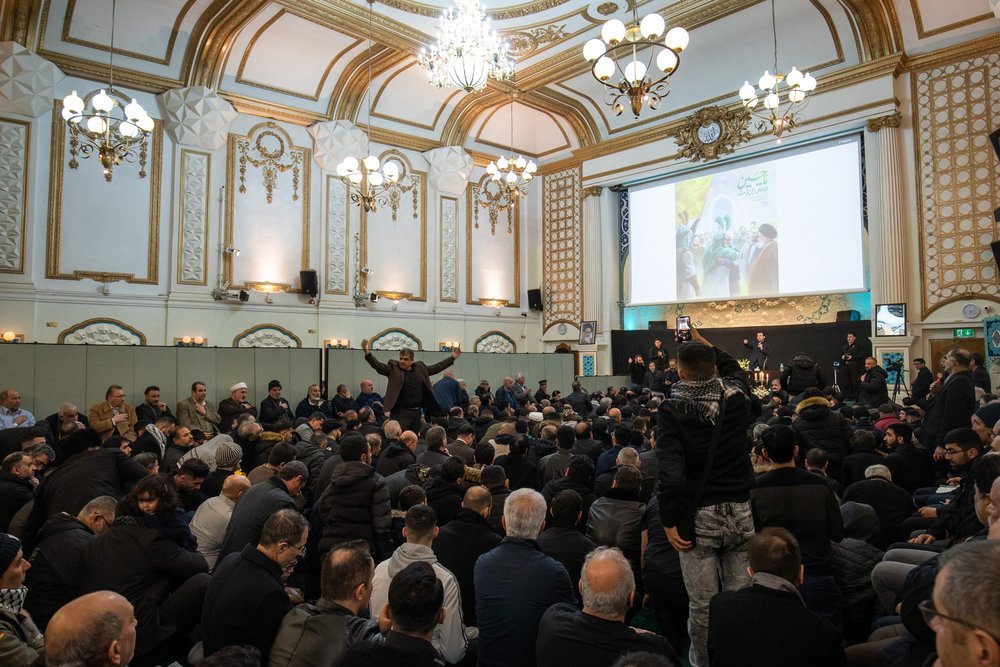
The debate has rapidly spread across social media, where thousands of users have expressed sharply divided opinions.
Some argue the government is being dangerously naïve by allowing organizations with alleged foreign regime links to recruit personnel from overseas.
Others accuse politicians of unfairly targeting Muslim charities and creating suspicion without presenting concrete evidence of illegal activity.
The discussion has therefore expanded beyond immigration and into wider questions surrounding religious freedom and equal treatment.
Community leaders have warned that public debate must distinguish between legitimate security concerns and unfair assumptions directed toward religious organizations.
They argue that faith groups should not face additional restrictions solely because of their religious identity.
At the same time, national security experts counter that concerns are focused on alleged foreign state influence rather than religion itself.
According to these voices, the central issue is whether any organization connected to governments viewed as hostile should receive special immigration privileges.
That distinction has become one of the defining features of the public discussion.
Political opponents are now demanding greater disclosure from the government regarding the decision-making process.
Some MPs have called for ministers to publish details explaining how background checks were conducted and whether security agencies were consulted before the sponsorship licence was issued.
Others want Parliament to review the rules governing charities and religious institutions participating in the immigration sponsorship system.
Immigration policy has already become one of Britain’s most politically sensitive issues.
Public concern over record migration levels, asylum backlogs, and border security has dominated political debate for several years.
Against this backdrop, any decision involving immigration and national security inevitably attracts intense public attention.
Analysts say this controversy reflects broader tensions inside British politics.
The country continues to balance competing priorities, including protecting national security, preserving religious freedom, supporting legitimate charities, and maintaining an immigration system viewed as fair and transparent.
Finding that balance has become increasingly difficult as geopolitical tensions grow.
Some observers believe the government now faces pressure to strengthen vetting procedures for all organizations seeking sponsorship licences.
Others argue that changing the rules in response to a single controversial case could create unintended consequences for hundreds of legitimate charities and religious institutions operating across Britain.
The Home Office has not publicly suggested that sponsorship rules are being changed as a result of this specific controversy.
However, political pressure is continuing to build.
Campaign groups are demanding additional oversight.
Opposition politicians are seeking further explanations.
Meanwhile, supporters of the existing system warn against allowing political controversy to replace evidence-based decision-making.
Whether the current licence remains in place or becomes the subject of further review, the debate has already highlighted the growing intersection between immigration policy, national security, foreign influence, and public trust.
For many Britons, the controversy is no longer simply about one charity.
It has become a wider question about how Britain should respond when organizations facing allegations of links to foreign governments seek access to sensitive parts of the country’s immigration system.
As Parliament, security experts, community leaders, and the public continue debating the issue, pressure is mounting for greater transparency from the government.
Whatever conclusions are ultimately reached, the case has already exposed deep divisions over how Britain should balance openness with vigilance in an increasingly uncertain geopolitical environment.
