Jude Bellingham Questions FIFA’s Third-Place Playoff: “What Do They Want From Us?” England Star Sparks Heated Debate Ahead of France Clash
Jude Bellingham Questions FIFA’s Third-Place Playoff: “What Do They Want From Us?” England Star Sparks Heated Debate Ahead of France Clash
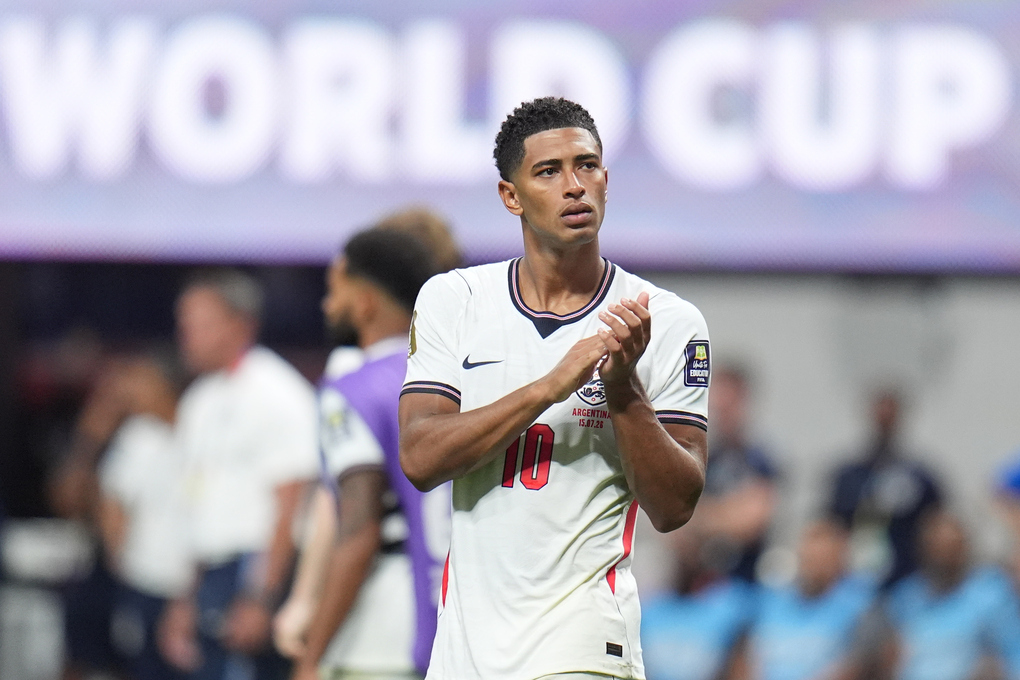
The debate surrounding the FIFA World Cup third-place playoff has erupted once again after England midfielder Jude Bellingham delivered an emotional and controversial assessment of the match, suggesting it serves little purpose for players who had dreamed of lifting the trophy.
England’s heartbreaking defeat in the semifinal left players devastated, with their hopes of reaching the World Cup final disappearing in painful fashion. Now, instead of preparing for the biggest match in football, Thomas Tuchel’s squad must regroup for a third-place playoff against France—a fixture that many fans, pundits, and even players have long questioned.
Bellingham’s comments have immediately become one of the biggest talking points ahead of the encounter, especially after England manager Thomas Tuchel himself admitted that he considered the match largely meaningless in the context of England’s ambitions.
Together, their remarks have ignited fierce discussion across social media, with supporters split over whether FIFA should abolish the bronze-medal match altogether.
“We Gave Everything”
Speaking after England’s semifinal disappointment, Bellingham made it clear that the squad had only one objective throughout the tournament.
“We gave everything we had to reach the World Cup final, but unfortunately it didn’t happen.”
For England’s players, every sacrifice during the past month—from exhausting training sessions to battling through injuries—had been made with one dream in mind.
That dream is now over.
The midfielder suggested that the emotional burden of falling short cannot simply disappear because another fixture remains on the schedule.
Instead, players are expected to recover physically and mentally within just a few days before taking the field once again.
“This Match Doesn’t Mean Anything For Our Goal”

The most controversial part of Bellingham’s remarks came when discussing England’s final assignment at the tournament.
“This match doesn’t mean anything for what we came here to achieve.”
Those words immediately spread across football media, reopening an argument that has existed for decades.
Many supporters agree with Bellingham’s assessment.
England did not travel across the world hoping to finish third.
They came believing they could become world champions.
For those fans, the bronze-medal game feels like little more than an exhibition played after both teams have already suffered the emotional pain of elimination.
Others disagree.
Some believe representing the national team should always carry meaning regardless of the circumstances.
Winning a World Cup medal—even bronze—still becomes part of football history.
That disagreement has only intensified since Bellingham’s interview.
“What Does FIFA Want?”
Perhaps the sentence generating the strongest reaction was his criticism of the tournament schedule.
“I don’t understand what the organizers want. Do they want to squeeze every last bit of energy out of the players?”
The modern football calendar has become one of the sport’s hottest issues.
Elite players regularly exceed 60 matches each season before international tournaments even begin.
Many arrive at the World Cup already carrying minor injuries or accumulated fatigue.
By the knockout rounds, recovery time becomes increasingly limited.
Bellingham implied that asking exhausted players to compete once more after suffering semifinal heartbreak raises legitimate questions about player welfare.
His comments echo concerns voiced by numerous footballers over recent years regarding fixture congestion.
“We’re Exhausted”
Bellingham did not hide the physical reality facing England’s squad.
“We’re exhausted.”
That simple statement resonated with many supporters.
Several England players have endured relentless club campaigns before immediately joining the national team for World Cup duty.
Deep tournament runs demand maximum physical intensity every few days.
The emotional stress can be equally draining.
Recovering from a crushing semifinal defeat while preparing for another high-profile international match presents a challenge few outside professional football fully understand.
“It Feels Like A Formality”
The England midfielder also suggested the squad views the third-place playoff differently from previous knockout matches.
“Maybe this is just a formality before we leave the tournament.”
Those words have triggered another wave of criticism from some former players, who argue that representing England should never be described as routine.
Others defended Bellingham, insisting he was simply expressing the emotional reality inside the dressing room.
Supporters noted that honesty from players should not automatically be mistaken for disrespect.
Instead, they see his remarks as exposing the psychological impact of missing the World Cup final.
Tuchel And Bellingham On The Same Page

Bellingham’s comments arrive only shortly after Thomas Tuchel questioned the significance of the bronze-medal match himself.
The England manager acknowledged that the team’s ambitions had always centered on reaching the final.
With both the manager and one of England’s biggest stars expressing similar opinions, many observers believe the criticism carries greater weight than isolated complaints from individual players.
The situation has placed FIFA under renewed scrutiny.
Although the third-place playoff has existed for decades, calls to eliminate it have grown louder in recent years.
Critics argue that the match increases injury risk while offering limited competitive value.
Supporters of the fixture counter that it provides nations with one final opportunity to finish the tournament positively and reward traveling fans.
One Bright Spot: Facing Mbappé
Despite his frustration, Bellingham ended his remarks on a noticeably lighter note.
“Maybe I’ll share some love with Mbappé again—he’s my friend.”
The comment quickly attracted attention online.
Bellingham and Kylian Mbappé have developed mutual respect through years of competing at the highest level.
Their friendship adds an intriguing storyline to a match that many have labeled unnecessary.
Even if England and France no longer have the World Cup trophy within reach, fans may still witness two of football’s brightest stars sharing another memorable moment after the final whistle.
Fans Divided Like Never Before
Reaction across social media has been immediate and deeply divided.
One group believes Bellingham simply voiced what countless footballers secretly think.
From their perspective, the bronze-medal match no longer fits the demands of the modern football calendar.
Another group argues that players representing their country should never publicly question the value of an international fixture.
Some supporters even believe England should embrace the opportunity to end the tournament with a victory rather than focusing on disappointment.
The controversy has become far larger than England versus France.
Instead, it has evolved into a broader conversation about player welfare, fixture congestion, mental fatigue, and whether football traditions should adapt to the realities of the modern game.
A Debate That Won’t End Soon
Regardless of the final result against France, Bellingham’s remarks are likely to remain one of the defining talking points of this World Cup.
His willingness to publicly question the purpose of the third-place playoff has amplified an argument that resurfaces after nearly every World Cup.
Whether fans agree with him or not, one thing is clear: the discussion is no longer limited to supporters and pundits. England’s biggest stars are now openly asking whether football’s oldest traditions still serve today’s game.
As England prepares for one final appearance before heading home, the spotlight may no longer be focused solely on the scoreline. Instead, it rests on a much bigger question that continues to divide the football world:
Does the World Cup still need a third-place playoff—or has the time finally come to let the losing semifinalists go home?
