England End Their World Cup With Fireworks, But the Debate Around Thomas Tuchel Is Only Just Beginning
England End Their World Cup With Fireworks, But the Debate Around Thomas Tuchel Is Only Just Beginning

England may not have lifted the 2026 FIFA World Cup trophy, but they certainly refused to leave quietly.
In one of the most astonishing matches of the tournament, the Three Lions defeated France 6-4 in a breathtaking third-place playoff that delivered ten goals, countless moments of drama, and one final reminder of the attacking talent England possesses. Supporters around the world witnessed a spectacle worthy of a final, even if the prize at stake was only third place.
Yet, as the celebrations began after the final whistle, another conversation quickly took over social media.
Does this performance prove Thomas Tuchel is the right man to lead England into Euro 2028? Or does one entertaining victory fail to erase the disappointment of missing another World Cup final?
Those questions are already dividing football fans across England.
The irony of England’s tournament is impossible to ignore.
Only a few days earlier, criticism of Tuchel had reached its highest point after England’s heartbreaking semi-final defeat. Many supporters questioned his tactical decisions, his substitutions, and whether England had played too cautiously when it mattered most.
Some even wondered whether the Football Association should already begin looking for another manager before Euro 2028.
Now, after scoring six goals against one of the strongest football nations in the world, the mood has shifted dramatically.
Not everyone is convinced.
England’s attacking display against France was exactly what supporters had been begging to see throughout the tournament.
The team attacked with confidence.
They played with freedom.
They pressed high.
They created chance after chance.
Instead of protecting a narrow lead, England continued looking for goals.
For many fans, this was finally the England they had hoped Tuchel would build from the very beginning.
Social media immediately filled with praise.
Many supporters argued that Tuchel deserves credit for refusing to let the squad mentally collapse after the semi-final defeat. Losing the chance to play in the World Cup Final often destroys a team’s motivation, yet England responded by producing arguably their most entertaining performance of the competition.
That resilience, according to supporters, reflects good coaching.
Others pointed toward the attacking statistics.
Six goals against France is no small achievement.
Very few international teams can claim to have dismantled France in such spectacular fashion.
England looked dangerous every time they attacked.
The movement was sharper.
The passing was quicker.
The players looked liberated.
For some fans, this is proof that Tuchel’s ideas are finally beginning to take shape.
But the critics have not disappeared.
Far from it.
Many supporters argue that the third-place playoff changes nothing.
Their view is simple.
England’s objective was never to finish third.
The goal was to win the World Cup.
Everything else represents failure.
Those fans believe the semi-final remains the match that defines Tuchel’s tournament.
They argue that England played with greater freedom only because the pressure was gone.
There was no place in the final to lose.
No trophy on the line.
No history waiting to be made.
Without that burden, England finally attacked naturally.
Some supporters have even asked why England could not play this aggressively against Argentina.
Why wait until the final match of the tournament?
Why not trust the players earlier?
Those questions continue to dominate online discussion.
Another argument focuses on consistency.
Throughout the tournament, England showed flashes of brilliance.
There were moments of incredible attacking football.
There were also periods where the team struggled to control matches despite possessing one of the most talented squads in international football.
Critics believe elite managers are judged by consistency rather than isolated performances.
One thrilling victory cannot erase tactical questions raised over previous matches.
Others, however, believe judging Tuchel after only one major tournament would be unfair.
International football offers managers very limited preparation time compared with club football.
Building tactical chemistry takes years, not weeks.
Many of England’s most successful international coaches needed multiple tournaments before finding the right balance.
Supporters backing Tuchel argue that Euro 2028 could become the tournament where everything comes together.
England remains blessed with extraordinary young talent.
Players entering their prime over the next two years could make this one of the strongest England generations in decades.
If Tuchel successfully blends experience with youth, many believe England could arrive at Euro 2028 as genuine favourites.
The biggest positive from the World Cup may actually be psychological.
England demonstrated remarkable character by recovering from the emotional pain of missing the final.
Instead of allowing disappointment to consume them, they produced football filled with confidence and personality.
That mentality could become invaluable moving forward.
Winning cultures are often built through setbacks.
Learning how to respond after failure is frequently just as important as learning how to celebrate success.
Tuchel himself has repeatedly spoken about developing a team capable of handling pressure on the biggest stage.
Whether England achieved that remains open to debate.
What cannot be denied is that the squad refused to surrender emotionally.
Individual performances also strengthened optimism.
Several young players showed they belong among the world’s elite.
Experienced leaders stepped forward when required.
England looked united.
The dressing room appeared fully committed despite the disappointment of missing the World Cup Final.
That unity could become Tuchel’s greatest asset heading toward Euro 2028.
Still, football supporters are famously impatient.
Another disappointing tournament could quickly erase the goodwill created by this remarkable victory over France.
Equally, another year of development could transform today’s criticism into tomorrow’s admiration.
That is the reality of international football.
Managers often swing from hero to villain—and back again—in just a few matches.
Thomas Tuchel now finds himself exactly in that position.
Some supporters see a coach who rebuilt confidence after heartbreak and produced England’s most entertaining football of the tournament.
Others see a manager who only discovered the right formula after England’s dream of winning the World Cup had already disappeared.
Both opinions carry weight.
Both are supported by evidence.
Perhaps that explains why this debate has become one of the biggest talking points following England’s dramatic 6-4 victory over France.
The result secured third place.
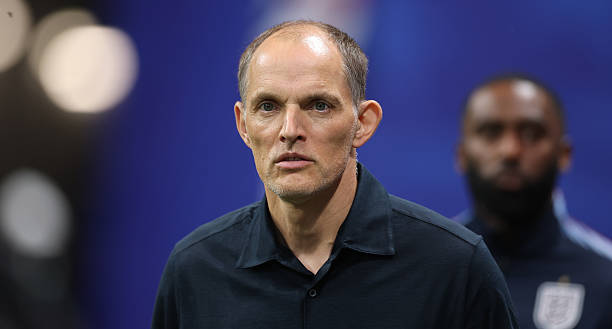
But more importantly, it reopened a conversation about England’s future.
Should the Football Association continue trusting Thomas Tuchel through Euro 2028?
Or should England begin searching for someone capable of taking one final step toward ending decades of tournament frustration?
One unforgettable match has made that question even harder to answer.
After scoring six goals against France, belief has returned.
Yet expectations have grown even higher.
The road to Euro 2028 starts now—and every decision from this point forward will be judged against one simple standard.
Can Thomas Tuchel finally deliver the trophy England has been waiting for?
