Shabana Mahmood dismisses calls to copy Spain’s migrant pushback as it’s ‘trickier’ to tackle Channel crossings
Shabana Mahmood Defends UK’s Channel Policy as Critics Question Why Britain Won’t Follow Spain’s Ceuta Response

The UK’s immigration debate has intensified once again after Home Secretary Shabana Mahmood rejected calls for Britain to replicate Spain’s rapid migrant return strategy following the unprecedented mass crossings into Ceuta. Her comments have sparked fierce political debate, with supporters arguing that the situations are fundamentally different while critics insist the Government is using geography as an excuse for failing to tackle the Channel crisis.
Speaking after renewed comparisons between Britain and Spain, Mahmood argued that the UK’s small boats challenge cannot simply be compared with events at the Spanish territory of Ceuta because the legal, geographical and operational circumstances are entirely different.
“I think what we’ve seen in Ceuta is unique to those particular circumstances,” she said, emphasizing that Spain’s North African enclave shares a land border with Morocco, making immediate returns possible in ways that are not available in the English Channel.
According to the Home Secretary, the Channel presents a far more complicated security and legal environment.
“That is different to a people-smuggling trade that crosses the whole of the Channel,” Mahmood explained. “You’re in both French waters and then English waters, and that makes the work that we do different and trickier in many ways.”
Her remarks came just days after shocking scenes unfolded in Ceuta, where more than 60,000 people reportedly crossed from Morocco into the tiny Spanish territory during a dramatic 48-hour period. Thousands of migrants rushed border crossings, climbed fences and even swam around coastal barriers in one of Europe’s largest sudden migration events in recent years.
Spanish authorities reacted swiftly.
Security forces rapidly rounded up huge numbers of arrivals and transported them back across the border into Morocco without carrying out lengthy asylum procedures. Images of buses carrying migrants back to the frontier spread rapidly across social media, prompting many British commentators to ask why similar action could not be taken in the UK.
The comparison immediately reignited Britain’s long-running argument over illegal Channel crossings.

Every year thousands of migrants attempt the dangerous journey across one of the world’s busiest shipping lanes using overcrowded inflatable boats operated by sophisticated smuggling gangs. Many crossings are intercepted by Border Force vessels before migrants are brought ashore to begin the UK’s asylum process.
Critics argue that this system has become increasingly attractive to illegal migrants because successful arrivals are generally allowed to remain in Britain while their asylum applications are processed, a process that can take months or even years.
Mahmood rejected the suggestion that Britain could simply imitate Spain.
She stressed that Spain’s response depended on the unique legal framework surrounding Ceuta and its immediate land connection to Morocco.
Unlike Spain, Britain must coordinate operations with France across international waters before migrants reach UK territory. Once individuals arrive in Britain, they become subject to British immigration law, international refugee obligations and human rights protections.
That legal distinction, Mahmood argued, makes rapid removals significantly more difficult.
Her comments, however, have done little to silence opponents.
Conservative politicians and several migration experts say geography alone cannot explain why Britain continues to struggle with small boat arrivals despite repeated promises from successive governments to “stop the boats.”
Many point to Spain’s decisive action as evidence that strong political will can dramatically reduce irregular migration.
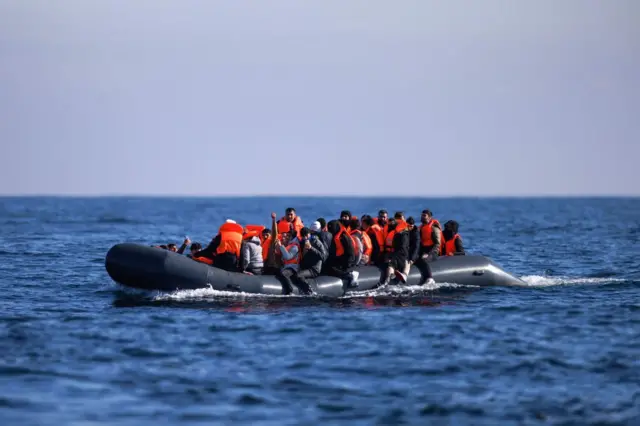
Others argue that the UK’s asylum system itself acts as a pull factor, encouraging migrants to risk the dangerous crossing because they believe they are unlikely to be removed quickly.
The debate has become even more heated following newly released figures surrounding Britain’s migrant return agreement with France.
Under the current arrangement, Britain can return one irregular migrant to France only for every asylum seeker it agrees to accept from French authorities.
The reciprocal agreement was presented as an important diplomatic breakthrough when it was introduced. However, the numbers remain relatively modest compared with the scale of Channel crossings.
Official figures show that hundreds of migrants have been returned under the scheme, while Britain has accepted a similar number of asylum seekers from France in exchange.
Supporters argue the agreement represents an important first step in rebuilding cooperation between London and Paris.
Critics describe it as far too limited to deter organised people-smuggling networks that continue launching boats from northern France.
Meanwhile, the humanitarian situation remains deeply concerning.
Several migrants have died attempting to cross the Channel this year, highlighting the enormous risks involved in the journey.
European authorities continue warning that criminal gangs are exploiting vulnerable people by charging thousands of pounds for places on overcrowded inflatable boats that are often unsuitable for open-water crossings.
The debate surrounding Mahmood’s comments also comes as Prime Minister Andy Burnham pledged to remain “relentless” in tackling illegal migration after another surge of Channel crossings during his first weeks in Downing Street.
During a visit to Dover, Burnham acknowledged that progress had been made but admitted that much more work remained.
He pointed to government figures suggesting that Channel crossings have fallen significantly compared with previous years, arguing that recent policies are beginning to deliver results.
Officials also continue highlighting increased cooperation with French authorities, expanded intelligence-sharing and stronger action against people-smuggling gangs operating across Europe.
Despite those claims, opposition parties argue that the continuing arrivals demonstrate that existing policies remain insufficient.
The images from Ceuta have only intensified those criticisms.
For many voters, Spain’s ability to return tens of thousands of migrants within hours appears to contrast sharply with Britain’s lengthy asylum procedures and complex legal appeals process.
Supporters of the Government insist such comparisons overlook major legal differences between the two situations.
Immigration lawyers note that Spain’s actions in Ceuta have themselves attracted criticism from human rights organisations, with questions raised about compliance with international asylum obligations and the treatment of vulnerable migrants.
Those competing interpretations illustrate the broader challenge facing European governments.
Countries across the continent are attempting to balance border security, humanitarian responsibilities and international legal commitments while confronting increasingly sophisticated smuggling networks that operate across multiple jurisdictions.
For Britain, the political pressure shows no sign of easing.
Every period of calm on the Channel is often followed by renewed crossings whenever weather conditions improve, ensuring immigration remains one of the country’s most contentious political issues.
Mahmood’s insistence that the UK cannot simply copy Spain may be legally accurate, according to many experts, but politically it is unlikely to end the debate.
Instead, her remarks have become another flashpoint in the wider national conversation over border control, asylum reform and whether Britain’s current approach is capable of deterring illegal migration while remaining consistent with its international obligations.
With public concern remaining high and Channel crossings continuing to dominate political headlines, the Government now faces growing pressure not only to explain why Britain’s circumstances differ from Spain’s, but also to demonstrate that its own strategy can produce lasting results.
