EU Calls Emergency Summit After 60,000 Migrants Storm Ceuta – What Will Andy Burnham Do Next?
EU Calls Emergency Summit After 60,000 Migrants Storm Ceuta – What Will Andy Burnham Do Next?


The European Union is preparing to hold an emergency summit next week after one of the largest migration crises in recent years unfolded on its southern frontier. More than 60,000 migrants crossed illegally into the Spanish enclave of Ceuta from Morocco in a matter of days, overwhelming local authorities, triggering political turmoil across Europe, and reigniting fierce debates over border security, asylum policy, and the future of European cooperation.
The unprecedented influx has already resulted in a humanitarian tragedy. According to officials, at least 67 people have died during the chaotic crossings, while thousands more required emergency medical assistance after attempting the dangerous journey across land and sea.
The crisis has sent shockwaves through Brussels, prompting EU leaders to convene an emergency meeting aimed at coordinating a unified response before tensions escalate even further.
At the center of the discussions will be a series of urgent questions: How should Europe respond to mass illegal migration? Should external borders be reinforced? And how can member states prevent another large-scale crossing without undermining humanitarian obligations?
The emergency meeting comes amid growing divisions between European governments over how the crisis should be handled.
Spain has sharply criticized several European partners for what it described as “selfish, polarising and unlawful” responses following the events in Ceuta. Madrid’s anger intensified after Italy temporarily suspended aspects of its border-free Schengen cooperation with Spain, arguing that additional safeguards were necessary to protect its own national security.
Spanish officials viewed the move as an unnecessary political gesture that risked undermining European solidarity during a time of crisis.
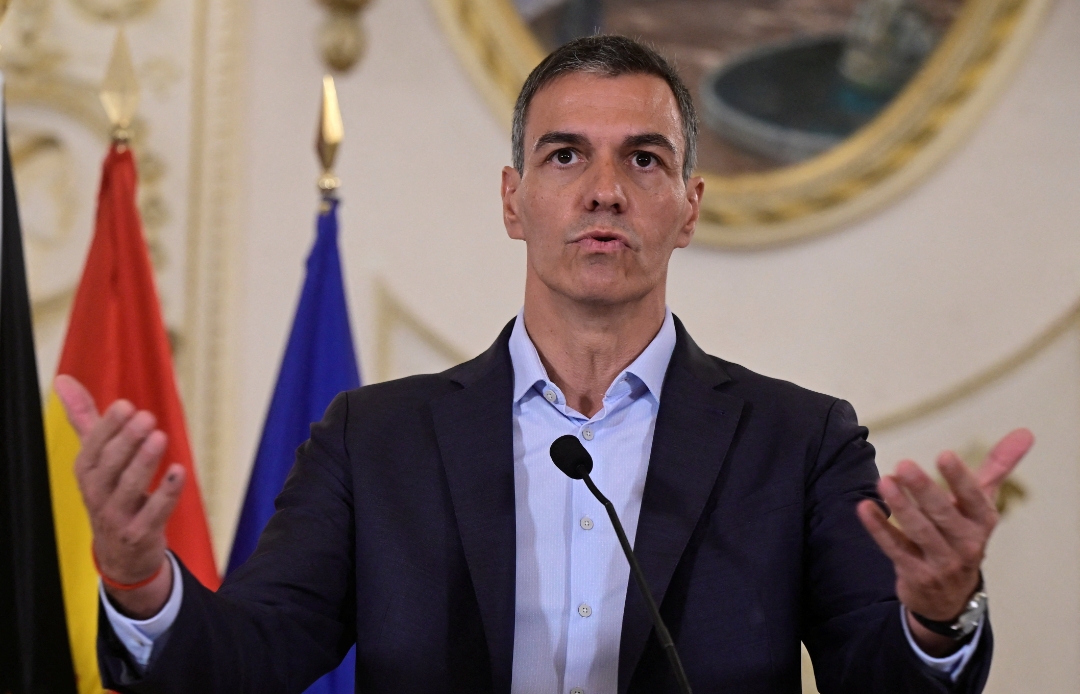
Prime Minister Pedro Sánchez has written directly to European Commission President Ursula von der Leyen, warning that certain governments were exploiting the migration emergency for domestic political gain.
In his letter, Sánchez argued that Spain had regained operational control of the border within just two days and had successfully halted any unauthorized movement toward mainland Europe.
He emphasized that Ceuta itself is outside the Schengen Area, insisting that fears of unrestricted migration across Europe were being exaggerated.
Despite Madrid’s reassurances, concern continues to spread throughout the European Union.
Twenty-two member states have now signed a joint letter calling for stronger protection of the EU’s external borders and closer coordination among governments to prevent future mass crossings.
Officials are expected to discuss additional funding for border operations, enhanced surveillance technology, expanded cooperation with Morocco, and reforms to the EU’s asylum system.

Many European governments believe the latest events demonstrate that migrant smuggling networks are becoming increasingly organized and capable of exploiting legal or political uncertainty within the bloc.
Spanish Interior Minister Fernando Grande-Marlaska has stated that normality has largely returned to Ceuta.
According to Spanish authorities, most migrants have already left the enclave, local businesses have reopened, and security forces remain deployed throughout the area to prevent renewed crossings.
Nevertheless, officials acknowledge that the situation remains fragile and that further attempts cannot be ruled out.
Spanish authorities have blamed human trafficking organizations for encouraging migrants to make the journey after a recent Supreme Court ruling limited the government’s ability to carry out immediate deportations of people arriving by sea.
Investigators believe criminal networks quickly adapted their messaging, portraying the legal decision as an opportunity for easier entry into Europe.
That narrative, officials argue, contributed significantly to the sudden surge in crossings.
The developments have once again placed migration at the forefront of European politics.
Immigration has become one of the defining issues across the continent, influencing elections, coalition negotiations, and public opinion in numerous countries.
Governments continue to face the difficult challenge of balancing humanitarian responsibilities with demands for stronger border enforcement.
The emergency summit is expected to expose those divisions once again.
While some governments advocate tougher migration controls and faster deportation procedures, others continue to emphasize international protection obligations and the rights of asylum seekers.
Finding common ground has proven increasingly difficult in recent years.
The crisis has also attracted attention in the United Kingdom, where immigration remains one of the country’s most politically sensitive issues despite Brexit.
Although Britain is no longer an EU member, developments on the continent often influence domestic political debate, particularly regarding border security and migration policy.
That has led many observers to ask an increasingly important question:
What will Andy Burnham do?

The Mayor of Greater Manchester has frequently spoken about the need for a balanced approach to immigration, emphasizing both effective border management and compassion for vulnerable people fleeing conflict or hardship.
However, the scale of the Ceuta crossings is likely to intensify pressure on political figures across Britain to clarify their positions.
Critics argue that Europe must adopt significantly tougher measures to prevent future mass crossings, while supporters of humanitarian organizations warn against policies that could place migrants at even greater risk.
Should Andy Burnham choose to comment publicly, he may face calls to explain how Britain should cooperate with European partners on migration despite no longer being part of the European Union.
Questions may also arise regarding intelligence sharing, law enforcement cooperation against smuggling networks, and broader strategies for addressing the root causes of irregular migration.
Any response from Burnham would almost certainly be scrutinized alongside the positions of other prominent British political figures.
Meanwhile, the upcoming EU summit is expected to produce new proposals aimed at strengthening external border management while maintaining cooperation among member states.
Whether those measures prove sufficient remains uncertain.
The Ceuta crisis has highlighted how rapidly migration pressures can escalate and how quickly they can become a source of political confrontation across Europe.
As leaders gather in Brussels, expectations are high that concrete action—not simply statements of solidarity—will emerge from the emergency meeting.
For millions of Europeans, the outcome could shape migration policy for years to come.
For Spain, the priority remains preventing another mass crossing while preserving European unity.
For the European Union, the challenge is demonstrating that collective action remains possible despite growing political differences.
And for political leaders beyond the EU, including figures such as Andy Burnham, the crisis may become another defining test of how they intend to address one of the most divisive issues facing Europe today.
