Andy Burnham Pledges “We’ve Got Your Back” to Zelenskyy as UK Signals Strong Support for Ukraine
Andy Burnham Pledges “We’ve Got Your Back” to Zelenskyy as UK Signals Strong Support for Ukraine
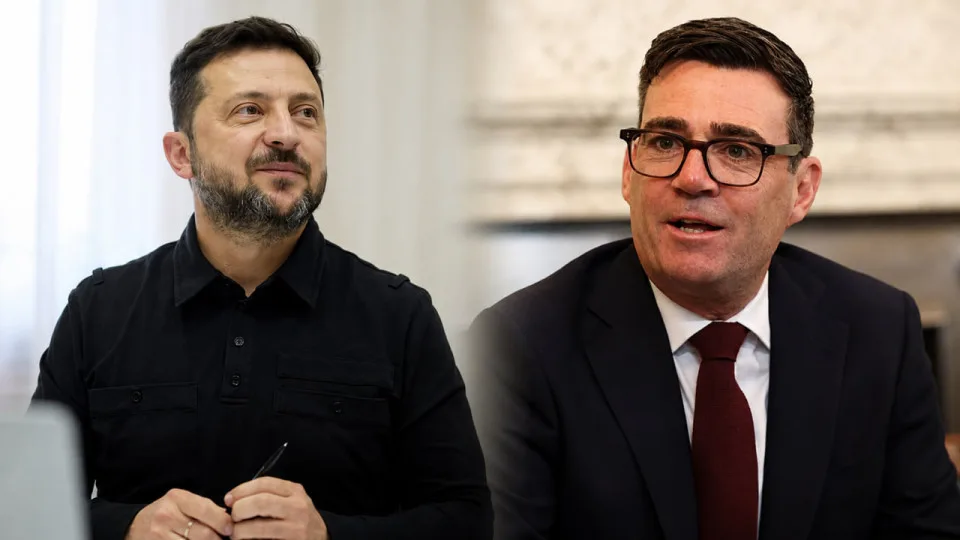
The United Kingdom has reaffirmed its commitment to Ukraine following a high-profile meeting between newly appointed Prime Minister Andy Burnham and Ukrainian President Volodymyr Zelenskyy. During their first official face-to-face talks since Burnham entered Downing Street, the British leader delivered a message that quickly captured international attention: “We’ve got your back.”
The short but powerful statement has become one of the defining moments of Burnham’s first days in office, signaling that despite changes in political leadership, Britain’s backing for Ukraine remains unwavering. The meeting, held in Great Britain, underscored the strategic partnership between London and Kyiv at a time when the war continues to reshape European security and global geopolitics.
A Symbolic First Meeting
President Volodymyr Zelenskyy was welcomed by Prime Minister Andy Burnham in what observers described as a carefully choreographed display of unity. The leaders held extensive bilateral discussions covering military cooperation, economic assistance, reconstruction efforts, and the broader security challenges facing Europe.
Before addressing members of both the British and Ukrainian armed forces, Burnham greeted Zelenskyy warmly and emphasized Britain’s determination to continue standing alongside Ukraine.
His declaration—“We’ve got your back”—was widely interpreted as more than a diplomatic courtesy. It represented a public commitment that the United Kingdom intends to remain one of Ukraine’s closest allies despite growing domestic political pressures and ongoing debates over defense spending.
The phrase immediately spread across international media and social platforms, becoming one of the most quoted moments from the visit.
Continuity Despite Political Change
Whenever a country elects a new prime minister, questions naturally arise about potential shifts in foreign policy. Ukraine has experienced changes in leadership among several of its Western allies since Russia launched its full-scale invasion, making every new administration an important test of continued international support.
Burnham appeared eager to remove any uncertainty.
Rather than announcing a dramatic policy shift, the new Prime Minister emphasized continuity, making clear that Britain would continue assisting Ukraine politically, militarily, and diplomatically.
Analysts noted that his comments were designed not only for Kyiv but also for NATO allies and Moscow, reinforcing the message that Britain’s commitment remains steady regardless of domestic political transitions.
Meeting With Military Personnel

One of the most symbolic aspects of the visit came when Burnham and Zelenskyy addressed members of both the British Armed Forces and the Ukrainian military.
The joint appearance highlighted the close military relationship that has developed over recent years. Britain has played a significant role in training Ukrainian soldiers, providing military equipment, and supporting defense initiatives aimed at strengthening Ukraine’s ability to resist Russian aggression.
Standing before soldiers from both nations carried considerable symbolic weight. It demonstrated that cooperation extends beyond political leaders and reaches the armed forces responsible for implementing joint security efforts.
For many observers, the setting reinforced the idea that Britain’s support is practical as well as rhetorical.
The Meaning Behind “We’ve Got Your Back”
Political leaders often choose their words carefully during international meetings, and Burnham’s phrase resonated because of its simplicity.
“We’ve got your back” conveys protection, solidarity, and trust without requiring lengthy diplomatic language.
For Ukrainians, who continue to endure the consequences of war, such expressions carry emotional significance in addition to political meaning.
The phrase suggests that Britain intends to remain a dependable partner through both military challenges and future reconstruction efforts.
International relations experts noted that concise statements often become memorable because they communicate clear intent to multiple audiences simultaneously:
-
Ukraine hears reassurance.
-
NATO allies hear consistency.
-
Russia hears continued Western unity.
-
British voters hear a statement of foreign policy priorities.
Zelenskyy’s Diplomatic Strategy
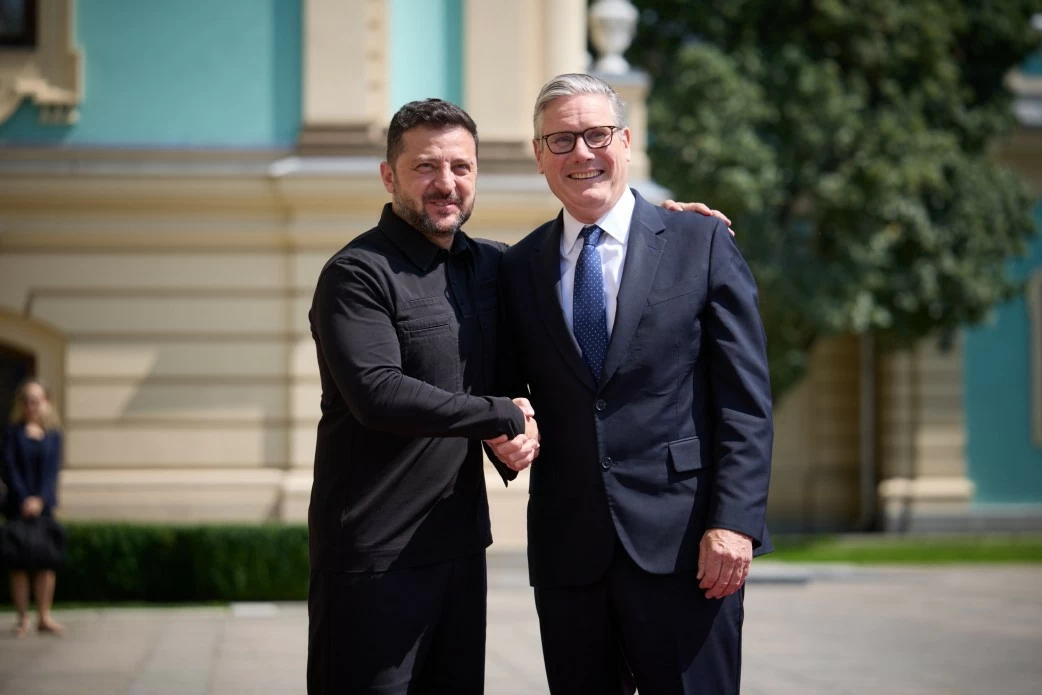
President Zelenskyy has continued an intensive campaign of international diplomacy aimed at maintaining support from allies.
Since the beginning of the conflict, he has met numerous world leaders to secure military aid, humanitarian assistance, sanctions against Russia, and long-term reconstruction commitments.
Each leadership transition among partner nations creates an opportunity to reaffirm existing relationships.
Meeting Burnham early in his premiership ensured that Kyiv could establish direct communication with Britain’s new government while publicly demonstrating that cooperation remains strong.
For Zelenskyy, maintaining visible unity among allies remains nearly as important as securing additional resources.
Britain’s Role in Supporting Ukraine
Since the outbreak of the war, Britain has consistently been among Ukraine’s strongest supporters.
British assistance has included military training programs, defense equipment, intelligence cooperation, humanitarian aid, financial assistance, and diplomatic backing on the international stage.
Successive governments have argued that supporting Ukraine contributes not only to defending Ukrainian sovereignty but also to protecting broader European security.
Burnham’s remarks suggest that this strategic assessment continues to guide British policy.
Although future governments may differ on domestic issues such as taxation, healthcare, or infrastructure, foreign policy toward Ukraine appears to remain an area where continuity is being emphasized.
International Reactions
Burnham’s comments attracted attention across Europe and beyond.
Supporters of Ukraine welcomed the statement as another indication that Western unity remains intact.
Many commentators argued that strong public commitments help strengthen Ukrainian morale while also signaling long-term resolve to Russia.
Others pointed out that expressions of solidarity ultimately need to be accompanied by continued material assistance, including military support, financial commitments, and diplomatic engagement.
As with previous declarations by Western leaders, observers will judge the significance of Burnham’s words based on future policy decisions and concrete actions.
Challenges Ahead
Despite the positive atmosphere surrounding the meeting, significant challenges remain.
Ukraine continues to face military, economic, and humanitarian pressures.
European governments must balance support for Ukraine with domestic political concerns, budget constraints, and broader international crises.
Burnham’s administration will likely face ongoing debates regarding defense spending, military assistance packages, and Britain’s long-term role in European security.
Maintaining public support for sustained assistance could become increasingly important as the conflict continues.
Nevertheless, Burnham’s first meeting with Zelenskyy suggests that his government intends to begin its foreign policy agenda with a clear message of alliance and stability.
A Defining Early Foreign Policy Moment
For a new Prime Minister, early international meetings often help define how an administration will be viewed abroad.
Burnham’s decision to publicly assure Zelenskyy that “We’ve got your back” has already become one of the most recognizable moments of his opening weeks in office.
Whether remembered as a symbolic gesture or the beginning of a broader strategic partnership under new leadership will depend on future developments.
For now, however, the meeting projected unity between London and Kyiv at a time when maintaining international cooperation remains one of Ukraine’s highest priorities.
As Britain enters a new political chapter, Burnham’s message leaves little doubt about one aspect of his government’s foreign policy: the United Kingdom intends to continue standing alongside Ukraine, signaling that its partnership with President Volodymyr Zelenskyy remains firmly in place as both countries confront an uncertain and challenging international landscape.
