Andy Burnham and Volodymyr Zelensky share handshake in first meeting between new PM and Ukrainian leader
Andy Burnham Meets Volodymyr Zelensky as War Rages On: Symbolic Handshake Sparks Debate Over Britain’s Future Role in Ukraine

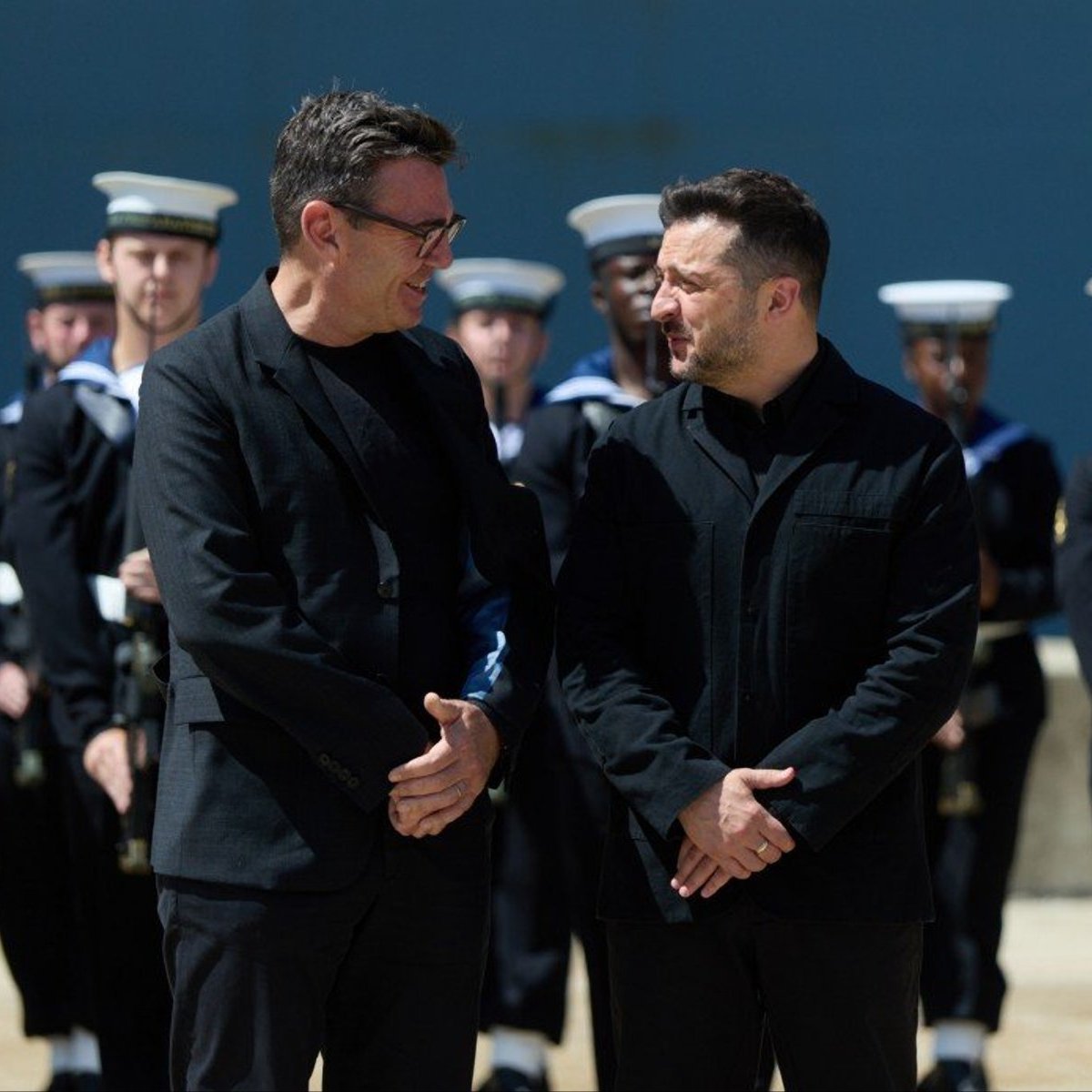
As the war in Ukraine continues to reshape global politics and security, every diplomatic meeting involving President Volodymyr Zelensky attracts worldwide attention. His recent meeting with newly appointed British Prime Minister Andy Burnham has quickly become one of the most discussed political moments in Europe. The two leaders shared a firm handshake during their first official meeting, a gesture that many interpreted as more than simple diplomacy.
Coming at a time when Ukraine remains under relentless military pressure and Europe faces growing concerns over security, energy, and economic stability, the encounter has generated intense debate. Supporters describe it as a clear signal that the United Kingdom remains committed to standing with Kyiv. Critics, however, question whether Britain can continue providing large-scale assistance while facing mounting domestic challenges.
The images of the meeting spread rapidly across international media and social networks, prompting discussions far beyond the official statements released afterward.
A Meeting Watched Around the World
The meeting took place during an official diplomatic engagement attended by military representatives and senior government officials. The carefully choreographed ceremony featured a formal welcome, a handshake between the two leaders, and a military honor guard, emphasizing the significance both governments placed on the occasion.
For Zelensky, every overseas meeting carries strategic importance. Since Russia launched its full-scale invasion, Ukraine has relied heavily on political, military, and financial support from Western allies. Maintaining those partnerships has become as essential as events unfolding on the battlefield.
For Burnham, assuming office during one of Europe’s most complex security crises means his first interactions with world leaders are being scrutinized closely. Observers were eager to determine whether the new British government would maintain the same level of commitment established by previous administrations.
Why Britain Matters to Ukraine
Since the beginning of the conflict, the United Kingdom has been among Ukraine’s strongest international supporters.
British assistance has included:
-
Military training for Ukrainian personnel.
-
Advanced defensive equipment.
-
Intelligence cooperation.
-
Economic assistance.
-
Humanitarian aid.
-
Diplomatic pressure through sanctions against Russia.
These measures have positioned Britain as one of Kyiv’s most reliable partners alongside the United States and several European Union members.
As leadership changes in London, many analysts believe continuity is critical. Any perception that British policy could weaken might encourage uncertainty among allies while offering strategic advantages to Moscow.
That is why even symbolic moments, such as Burnham’s first meeting with Zelensky, carry considerable geopolitical weight.
More Than Just a Handshake
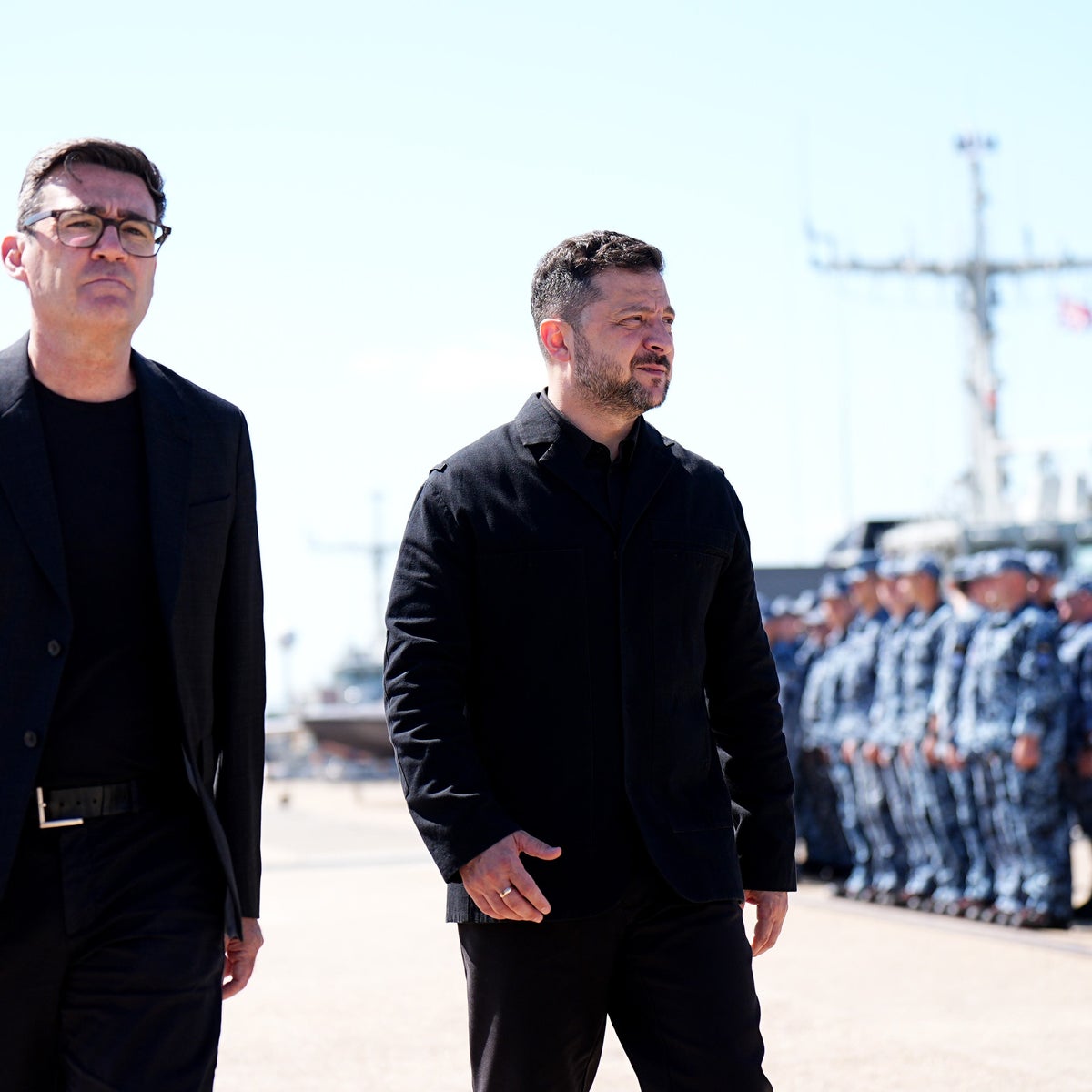
Political symbolism often matters nearly as much as policy itself.
The handshake between Burnham and Zelensky lasted only seconds, yet it immediately became the defining image of the visit.
Body-language experts and political commentators pointed to several details:
-
Direct eye contact.
-
Relaxed but confident posture.
-
Warm facial expressions during the greeting.
-
Formal military backdrop.
-
Coordinated public appearance.
Such imagery is carefully planned during high-level diplomatic visits because photographs often become lasting symbols of political relationships.
Supporters argued the visuals projected unity and stability during an increasingly uncertain period for Europe.
War Continues Despite Diplomacy
While leaders exchanged greetings, the situation inside Ukraine remained extremely difficult.
Fighting continues across multiple regions, with civilian infrastructure repeatedly targeted and both sides engaged in intense military operations. Air defense systems remain under heavy strain, while humanitarian organizations continue assisting millions of displaced civilians.
Ukraine also faces growing economic pressure.
Rebuilding damaged infrastructure, maintaining essential public services, and sustaining military operations require enormous financial resources. International assistance therefore remains indispensable.
The meeting served as a reminder that diplomacy and battlefield realities remain closely connected.
Domestic Questions in Britain
Although many welcomed Burnham’s commitment to Ukraine, the meeting has also fueled debate within Britain.
Some voters believe continued support for Ukraine is essential to defending international law and European security.
Others argue that domestic priorities—including healthcare, inflation, housing shortages, and economic recovery—should receive greater attention.
This division reflects a broader discussion taking place across Europe, where governments must balance international responsibilities with growing public concern over the cost of living.
Burnham now faces the challenge of reassuring both international partners and British taxpayers that his government’s foreign policy aligns with national interests.
International Reactions

European leaders largely welcomed the meeting as a positive signal of policy continuity.
NATO members continue emphasizing collective security while encouraging sustained assistance for Ukraine.
Financial markets showed little reaction, suggesting investors had largely expected Britain to maintain its existing approach.
Political analysts, however, noted that future decisions regarding military aid packages, defense spending, and reconstruction funding will ultimately matter more than ceremonial appearances.
In diplomacy, photographs capture attention—but budgets and legislation determine long-term commitments.
The Importance of Political Optics
Modern diplomacy unfolds in front of a global audience.
Within minutes of the meeting, images circulated across television broadcasts, news websites, and social media platforms worldwide.
Supporters praised the symbolism.
Critics questioned whether symbolic gestures alone are enough as the conflict enters another difficult phase.
Some argued that stronger commitments should accompany public appearances, while others warned against making promises that could become difficult to fulfill amid economic uncertainty.
This illustrates how international politics increasingly operates on two levels: official negotiations behind closed doors and public perception shaped by instantly shared images.
Ukraine’s Broader Diplomatic Strategy
Since the outbreak of war, Zelensky has become one of the world’s most active diplomatic leaders.
He has traveled extensively to strengthen alliances, secure military assistance, attract investment for reconstruction, and maintain international attention on Ukraine.
These visits are designed not only to obtain immediate support but also to demonstrate that Ukraine remains firmly connected to the democratic world despite ongoing conflict.
Every meeting with allied leaders reinforces that message.
The encounter with Burnham therefore fits into a broader strategy aimed at preserving international unity during what could become a prolonged conflict.
What Comes Next?
Attention will now shift from symbolism to policy.
Observers will watch closely for announcements regarding:
-
Future military assistance.
-
Humanitarian funding.
-
Reconstruction projects.
-
Economic cooperation.
-
Defense partnerships.
-
Additional sanctions on Russia.
If these initiatives follow, the meeting may be remembered as the beginning of a strong working relationship between the two leaders.
If concrete actions fail to materialize, critics may dismiss the event as little more than a carefully staged diplomatic photo opportunity.
Conclusion
The first official meeting between Andy Burnham and Volodymyr Zelensky arrives at a defining moment for Europe. With the war in Ukraine continuing to shape international politics, every diplomatic gesture carries significance beyond the ceremonial setting.
For supporters, the handshake symbolizes unity, resilience, and Britain’s determination to remain a steadfast partner during one of the most challenging periods in modern European history. For skeptics, it raises important questions about how long governments can balance international commitments with growing domestic pressures.
Ultimately, history will judge this meeting not by the photographs that captured global attention, but by the decisions that follow. In a conflict where diplomacy and military developments are inseparable, the true measure of leadership will be found not in symbolic moments alone, but in the policies, partnerships, and actions that emerge in the months ahead.
