“YOU BETRAYED THE NATION!” — Rupert Lowe Launches Explosive Broadside at Keir Starmer as Political Tensions Escalate
“YOU BETRAYED THE NATION!” — Rupert Lowe Launches Explosive Broadside at Keir Starmer as Political Tensions Escalate

A fierce political row has erupted in Britain after Reform UK MP Rupert Lowe delivered a blistering public attack on Prime Minister Keir Starmer, accusing him of abandoning the promises that helped bring Labour to power.
The heated confrontation has rapidly spread across social media, where clips of Lowe’s remarks have attracted intense debate among supporters and critics alike. At the center of the controversy are allegations of repeated policy reversals, questions surrounding government appointments, and growing public frustration over trust in politics.
Although many of the accusations being circulated online remain matters of political opinion or are based on disputed claims rather than established fact, the exchange has become another flashpoint in an increasingly polarized political climate.
A Speech Designed to Shock
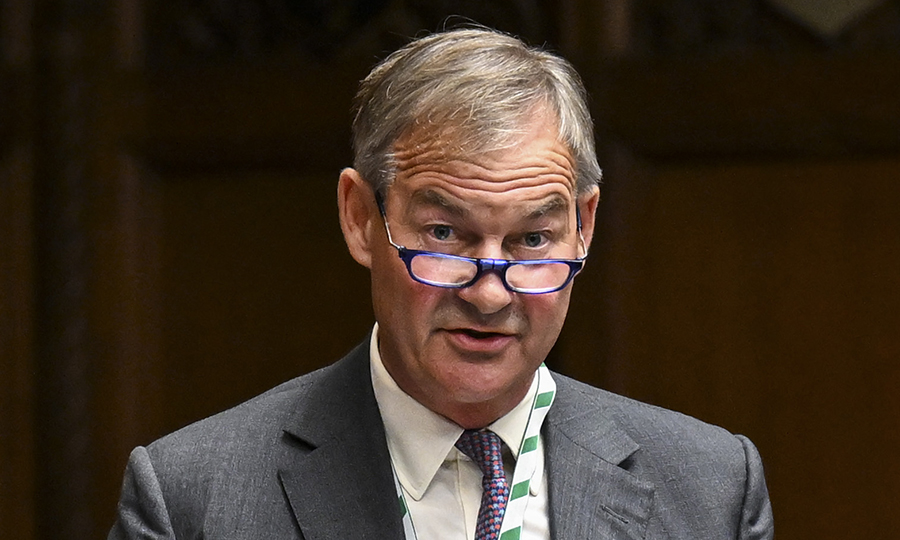
Rupert Lowe delivered his remarks with little attempt to soften his criticism.
Instead of focusing on individual policy disagreements, he framed his argument around what he described as a wider collapse in public confidence.
According to Lowe, many voters believed they were supporting one vision of government during the election campaign but have instead witnessed significant changes once Labour entered Downing Street.
His most memorable line came when he declared:
“You betrayed the nation.”
Within minutes, that phrase had begun circulating widely across X, Facebook, YouTube and TikTok, becoming the centerpiece of countless political discussions.
Supporters described the statement as an expression of frustration shared by many voters.
Critics argued it was inflammatory political rhetoric designed to generate headlines rather than encourage constructive debate.
Regardless of opinion, the clip quickly became one of the day’s most discussed political moments.
The Issue of Political U-Turns
Much of Lowe’s criticism focused on what he characterized as Labour’s policy reversals since taking office.
Opposition figures have repeatedly argued that several government positions differ from messages presented before the election.
Supporters of the government counter that governing often requires adapting to changing economic conditions, international developments and newly available information.
Political analysts note that nearly every government eventually faces accusations of breaking campaign promises.
The real disagreement often lies in whether a particular policy represents responsible adaptation or an abandonment of commitments made to voters.
For critics like Lowe, these changes have become symbolic of a broader credibility problem.
For Labour ministers, they represent pragmatic decisions made in response to governing realities.
Trust Remains the Central Battlefield
Beyond specific policies, the debate has increasingly centered on trust.
Lowe argued that the issue extends far beyond economics or legislation.
Instead, he claimed many members of the public no longer believe politicians consistently deliver what they promise.
That message appears to resonate with a section of the electorate that has become increasingly skeptical of Westminster politics after years of political upheaval, leadership changes and economic uncertainty.
Opinion polls in recent years have repeatedly shown declining public confidence in politicians across multiple parties rather than one party alone.
As a result, attacks focused on integrity often generate stronger emotional reactions than technical debates over legislation.
Peter Mandelson Returns to the Headlines
Another aspect of Lowe’s speech involved criticism surrounding Peter Mandelson’s appointment as Britain’s ambassador to the United States.
Mandelson remains one of Labour’s most recognizable political figures, having served in several senior government positions over previous decades.
His return to public office has divided opinion.
Supporters argue his diplomatic experience and international connections make him well suited to the role.
Critics believe his controversial political history makes the appointment politically risky.
Lowe used Mandelson’s appointment as part of a broader argument that establishment figures continue returning to influential positions despite longstanding public criticism.
Online Claims and the Epstein Debate
During his remarks, Lowe also referred to renewed online discussion involving Jeffrey Epstein.
Numerous posts on social media have attempted to connect a wide range of public figures to material associated with Epstein.
However, many such claims remain disputed, lack independent verification or simply reflect speculation circulating online.
Being mentioned in leaked documents or media discussions does not by itself establish wrongdoing, and allegations involving public figures should be assessed carefully based on verified evidence rather than viral commentary.
Nevertheless, references to the Epstein controversy continue to generate enormous online engagement whenever prominent political figures are discussed.
Lowe argued that these discussions illustrate broader concerns about transparency and accountability among powerful institutions.
Government supporters reject suggestions that such references provide evidence against current officials without substantiated facts.
Social Media Amplifies Every Political Battle
The controversy illustrates how rapidly political messaging can spread in the digital era.
Short video clips often travel much faster than lengthy parliamentary debates.
A single memorable sentence can dominate headlines for days.
Supporters of Lowe praised his direct speaking style, describing him as willing to challenge political elites without using carefully scripted language.
Others argued that emotionally charged rhetoric risks deepening political divisions while reducing complicated policy discussions to simplistic slogans.
Political communication experts increasingly observe that online algorithms tend to reward confrontation, outrage and emotionally powerful language.
As a result, dramatic exchanges frequently receive far greater attention than detailed policy analysis.
Divided Public Reaction
Public reaction has reflected Britain’s increasingly polarized political landscape.
Many viewers applauded Lowe’s willingness to confront the Prime Minister directly.
Some argued that politicians should face stronger public scrutiny and welcomed language they viewed as reflecting genuine public frustration.
Others accused Lowe of exaggerating political disagreements for maximum publicity.
Several commentators suggested that describing policy changes as a “betrayal of the nation” risks escalating political tensions unnecessarily.
Meanwhile, Labour supporters argued that governments inevitably adjust policies once confronted with the realities of office.
They maintain that flexibility should not automatically be interpreted as dishonesty.
Pressure on Downing Street
The government has continued facing questions over several domestic and international policy decisions in recent months.
Opposition parties have attempted to portray those decisions as evidence of inconsistency.
Labour ministers, however, argue that responsible government requires balancing campaign ambitions with economic constraints and national priorities.
Whether voters ultimately view those explanations as convincing remains a question that will likely influence future elections.
A Debate Far Larger Than One Speech
While Rupert Lowe’s remarks have generated enormous attention, the wider debate extends beyond one politician or one headline.
The controversy highlights deeper concerns about political trust, accountability and public confidence in democratic institutions.
For some voters, Lowe’s message reflects growing dissatisfaction with Britain’s political establishment.
For others, it represents another example of increasingly confrontational political discourse designed to fuel division rather than encourage thoughtful discussion.
What is certain is that the exchange has reignited discussion about leadership, credibility and the expectations placed upon elected governments.
As political arguments continue across Parliament, television studios and social media platforms, both supporters and critics of the Prime Minister will continue scrutinizing every decision made by the government.
Whether Rupert Lowe’s attack ultimately changes public opinion remains uncertain.
But one thing is beyond dispute: the phrase “You Betrayed the Nation” has become one of the most talked-about political slogans of the week, ensuring that debates over trust, leadership and accountability remain firmly at the center of British politics.
