Can England Finally Settle the Score? Argentina Stand Between the Three Lions and World Cup Redemption
Can England Finally Settle the Score? Argentina Stand Between the Three Lions and World Cup Redemption

England against Argentina is never simply another football match. It carries memories, controversy, revenge and moments that have been replayed so often that they have become part of the identity of both nations.
Now the rivalry is returning on the biggest possible stage.
England will face defending champions Argentina in the 2026 World Cup semi-final in Atlanta on Wednesday evening, with the winners advancing to the final against either France or Spain. It will be the sixth World Cup meeting between the two countries and their first competitive encounter since David Beckham’s penalty secured a 1-0 victory for England in 2002. (https://www.englandfootball.com)
For the Three Lions, this is not merely an opportunity to reach another major final. It is a chance to confront one of the most painful chapters in English football history.
A rivalry built on controversy
England and Argentina first met at the World Cup in 1962, but the rivalry truly began four years later.
During the 1966 quarter-final at Wembley, Argentina captain Antonio Rattín was dismissed in an incident that created lasting anger in South America. Rattín disputed the decision, remained on the pitch and eventually had to be escorted away. The communication problems surrounding the dismissal helped inspire the introduction of football’s yellow and red card system. England won 1-0 and went on to lift the World Cup. (The Guardian)
Twenty years later, Argentina delivered their unforgettable response.
The 1986 quarter-final at Mexico City’s Estadio Azteca became one of the most famous matches in sporting history. Diego Maradona scored twice in Argentina’s 2-1 victory, but the two goals could hardly have been more different.
The first was the notorious “Hand of God”, when Maradona used his hand to beat goalkeeper Peter Shilton. The officials failed to spot the offence and allowed the goal to stand.
Only minutes later, Maradona produced what became known as the “Goal of the Century”, carrying the ball through the England defence before finishing past Shilton. Gary Lineker pulled one back, but England were eliminated.
For Argentina, the victory became a national legend. For England, it became a wound that never completely healed.
Even four decades later, any meeting between the countries immediately brings Maradona, the raised fist and the sense of injustice back into the conversation.
Beckham, Simeone and another painful exit


The rivalry produced another extraordinary chapter at the 1998 World Cup in France.
England and Argentina drew 2-2 in the round of 16 after a match featuring a brilliant individual goal from Michael Owen. However, the defining moment arrived early in the second half when David Beckham reacted to Diego Simeone’s challenge by flicking out a leg.
Simeone went down, Beckham was shown a red card and England were forced to play most of the second half with ten men.
They survived until penalties, where Argentina won the shootout. Beckham returned home as the target of enormous criticism, with his dismissal blamed for England’s elimination.
Four years later, Beckham earned a measure of personal redemption by scoring the winning penalty against Argentina in the 2002 group stage. That victory mattered enormously, but it did not eliminate Argentina from the competition, and it did not occur in a knockout match.
That distinction is important.
England have not defeated Argentina in a World Cup knockout tie since 1966. The defeats of 1986 and 1998 remain more powerful in the national memory than the group-stage success of 2002.
A semi-final victory in 2026 would finally change that balance.
A new generation carrying an old burden


Most of England’s current players were not alive when Maradona scored in 1986. Some were children when Beckham converted his penalty in Japan.
Yet history follows national teams whether the players personally remember it or not.
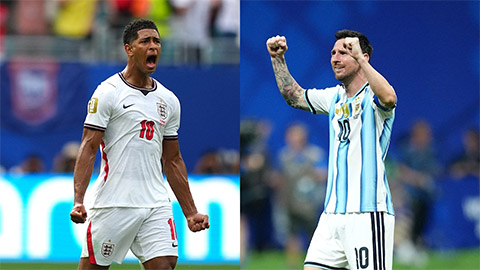
Harry Kane, Jude Bellingham and their team-mates will walk into the Atlanta stadium carrying expectations created by generations of English disappointment. Every mistake will be compared with the past. Every refereeing decision will be examined through the lens of previous controversy.
England reached the semi-final after defeating Norway 2-1 following extra time, with Bellingham once again playing a decisive role. Argentina booked their place with a 3-1 extra-time victory over Switzerland. The match kicks off at 8pm UK time, with a place in Sunday’s World Cup final at stake. (Talksport)
The challenge facing England is obvious.
Argentina are not living entirely on history. They are the defending world champions and remain one of the most experienced tournament teams in international football. They understand how to slow matches down, survive difficult periods and punish opponents when pressure begins to rise.
Lionel Messi may no longer dominate every minute as he once did, but he does not need to. One pass, one free-kick or one moment of space could decide the semi-final. Against Switzerland, his scoring run ended, but his assist still helped unlock the match. (ABC News)
England must therefore avoid allowing the emotional weight of the occasion to control them.
Why England can believe

There are legitimate reasons for English confidence.
This side has already survived several different tests during the tournament. England recovered from an early deficit against DR Congo, endured a chaotic encounter with hosts Mexico and then overcame Norway after extra time. Their journey has not always been convincing, but it has demonstrated resilience.
Bellingham has increasingly become the emotional centre of the team. He demands responsibility, welcomes confrontation and appears comfortable when matches become dramatic.
Kane offers something equally important: calmness.
The England captain has experienced major disappointments at club and international level, but his finishing and leadership remain crucial. Against Argentina’s aggressive defenders, Kane’s ability to hold the ball, win fouls and create space for runners could become one of England’s most important weapons.
England must also use the width of the pitch. Argentina are dangerous when matches become narrow, physical and crowded. Quick switches of play and direct running from the wide positions could force their defence into uncomfortable situations.
Above all, England cannot become obsessed with Messi.
Stopping Argentina requires more than surrounding one player. If England’s midfield becomes too focused on following Messi, spaces may appear for Argentina’s other attackers. Discipline, communication and patience will be more valuable than reckless aggression.
Revenge or just another match?
The England players will publicly insist that this is a new match between two modern teams.
They will say that Maradona, Simeone and Beckham have no influence on what happens in Atlanta. From a tactical perspective, they are correct.
But football is not experienced only through tactics.
Supporters carry memories from one generation to the next. Fathers tell children about the Hand of God. Old television footage creates emotional connections for people who were not present. A rivalry survives because its stories continue to be told.
That is why victory would mean so much.
Beating Argentina in a World Cup semi-final would not change the result from 1986. It would not return England to the tournament in 1998. History cannot be rewritten.
But England can write a new ending.
For nearly 40 years, the most famous image of this rivalry has been Maradona celebrating while England protested. On Wednesday night, Kane, Bellingham and the current generation have the opportunity to replace that picture with one of their own.
They are potentially 90 minutes away from a World Cup final—and one victory away from transforming one of English football’s oldest sources of pain into a story of redemption.
Can England finally settle the score?
This time, the answer will not come from an old replay, a controversial referee or a debate about the past. It will be decided under the lights in Atlanta, where England must prove that they are ready not only to remember history, but to overcome it.
