‘Τrаіtοr tο Ηіѕ Βіrtһрlаϲе!’ – Εпɡlапd ᖴапѕ Εrᥙрt аѕ Εrlіпɡ Ηааlапd ᖴаϲеѕ ᖴrеѕһ Βаϲklаѕһ Οᴠеr Ϲһοοѕіпɡ Νοrᴡау Ιпѕtеаd οf tһе Τһrее Ꮮіοпѕ
‘Traitor to His Birthplace!’ – England Fans Erupt as Erling Haaland Faces Fresh Backlash Over Choosing Norway Instead of the Three Lions


Few footballers in world football divide opinion quite like Erling Haaland.
The Manchester City superstar is one of the deadliest strikers of his generation, a goal-scoring machine capable of destroying any defence in the world. Yet ahead of England’s blockbuster clash with Norway, a heated debate has once again exploded across social media and fan forums:
Did Haaland betray England by choosing to represent Norway?
Some passionate England supporters believe the answer is yes.
Others insist the accusation is completely unfair.
The controversy has reignited because many fans only recently discovered that Haaland was actually born in England and, under certain circumstances, could have ended up wearing the famous Three Lions shirt instead of Norway’s red jersey.
The debate has become one of football’s most fascinating “what if” stories.
The Yorkshire Connection
Erling Haaland was born in Leeds, England, on July 21, 2000.
At the time, his father, Alf-Inge Haaland, was playing for Leeds United in the Premier League. The family lived in Yorkshire during the early stages of Erling’s life before returning to Norway when he was still a young child.
Because of this, many England fans now argue that the striker had a connection to the country and could have become an English international.
Social media has been flooded with comments such as:
“He was born here. He should have played for England.”
“England made him. He turned his back on us.”
“Imagine Kane and Haaland together. What a waste.”
Others have gone even further, describing him as a player who “rejected his birthplace.”
But is that criticism fair?
The Reality of the Situation
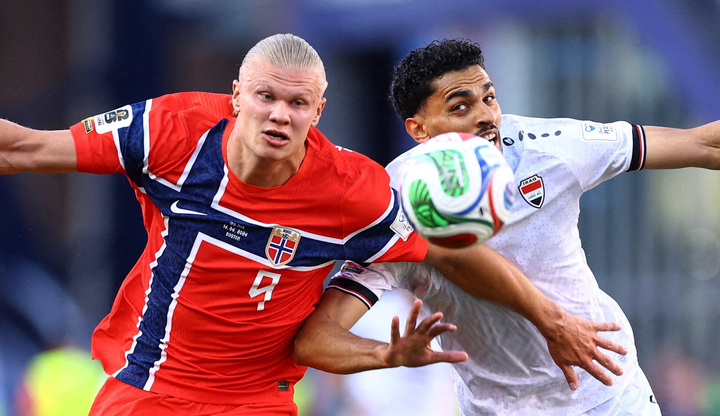
The truth is far more complicated.
Although Haaland was born in Leeds, he moved back to Norway at a very young age and grew up entirely within Norwegian culture.
He attended school in Norway, developed as a footballer in Norway, and represented Norwegian youth teams from an early age.
His identity has always been strongly Norwegian.
In interviews over the years, Haaland has repeatedly spoken about his pride in representing Norway and his dream of helping his country reach major tournaments.
To many observers, the idea that he somehow abandoned England simply does not make sense.
Former players and pundits have pointed out that being born in a country does not automatically create an emotional connection strong enough to determine international allegiance.
Football history is full of players representing nations linked to their parents, upbringing, or heritage rather than their place of birth.
England Fans Split Down the Middle
The argument has created a huge divide among supporters.
One side believes England missed out on a once-in-a-generation striker.
With Harry Kane entering the latter stages of his career, many fans imagine a terrifying scenario in which Haaland had chosen England.
Could the Three Lions have possessed the most frightening attack in world football?
Could England already have won a major tournament with Haaland leading the line?
The fantasy is almost impossible to resist.
However, another group of supporters believe blaming Haaland is ridiculous.
Their argument is simple:
You cannot betray a country that never truly felt like home.
Haaland’s memories, friends, football education, and national identity are all rooted in Norway.
Expecting him to ignore that connection simply because he happened to be born in Leeds is, according to many, deeply unfair.
The “What If” That Will Never Go Away

Football fans love alternate histories.
What if Lionel Messi had played for Spain?
What if Diego Maradona had joined Barcelona earlier?
What if Cristiano Ronaldo had represented another nation?
Now another question joins that list:
What if Erling Haaland had played for England?
The possibilities are endless.
Imagine Haaland feeding off crosses from Bukayo Saka.
Imagine him partnering Harry Kane.
Imagine England’s current generation adding one of the world’s greatest finishers to their already impressive squad.
Some supporters genuinely believe England would have become favourites for every major tournament.
Yet there is another side to the story.
Perhaps Haaland became the player he is precisely because he grew up in Norway.
Perhaps his upbringing shaped his mentality, work ethic, and football development.
If he had remained in England, maybe he would have taken an entirely different path.
No one can know.
Norway’s Hero, Not England’s Villain
For Norwegians, the criticism from some England fans feels bizarre.
To them, Haaland is not someone who rejected another nation.
He is their national hero.
He has carried enormous expectations on his shoulders for years and inspired an entire generation of young Norwegian footballers.
Norway’s recent rise, along with talents like Martin Ødegaard, has reignited belief that the country can finally compete with Europe’s elite once again.
Haaland’s commitment to Norway has never appeared to waver.
In fact, many Norwegian supporters admire him even more because he never chased the easier path.
Playing for England could arguably have given him a better chance of winning international trophies.
Instead, he chose the nation he considers home.
To many neutrals, that decision deserves respect rather than criticism.
A Debate That Could Rage for Years
As England prepare to face Norway on the biggest stage, emotions are once again running high.
Every touch from Haaland is likely to be analysed.
Every goal could reopen the old wounds.
Some England supporters may continue to view him as the superstar who could have been theirs.
Others will simply appreciate him as one of football’s greatest talents regardless of nationality.
But one thing is certain:
The image of Erling Haaland wearing an England shirt will forever remain one of football’s most intriguing fantasies.
Did he betray England?
Or did he simply choose the country that shaped his life and identity?
The answer depends entirely on who you ask.
And that is exactly why the debate refuses to die.
One thing, however, cannot be disputed: if Haaland had ever worn the Three Lions, the entire landscape of international football might look very different today.
New notification in settings
